Anyone who is friends with us on Facebook or a part of our local Buy Nothing Group already knows that we have been decluttering our home. We have always been fans of Facebook swap shops, Marketplace, and Buy Nothing groups, but in the past, we purchased as much as we sold and gave away. These days, our activity is decidedly lopsided.
We’ve talked a little bit about minimalism before. We believe that minimalism can take many forms based on your goals and plans. In our case, of course, the goal is to purge practically all of our possessions by the end, so our plans are more extreme than yours may be.
New purchases
We do still buy things. We just ask more questions before we make the purchase. Obviously we buy food and toiletries and other perishable things. But for everything else, we ask:
- Do we really need it? Can we make it through the next 109 weeks without it?
- Will we have to sell it, throw it away or give it away in two years?
- Will one of our kids want it?
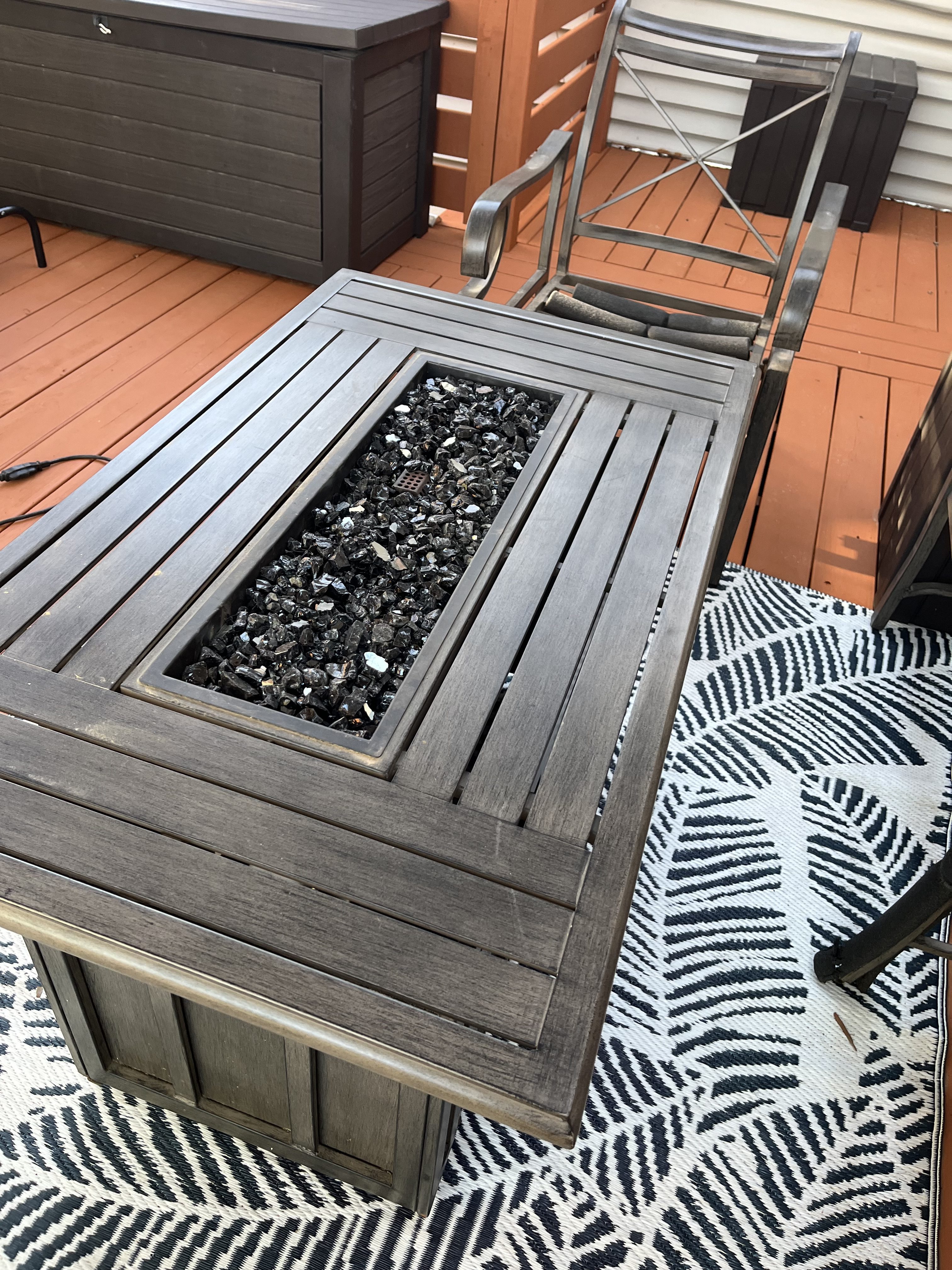
A good example is the recent purchase of a new regulator for our fire table on the deck. During the spring, summer, and fall, we use our deck pretty much every night. Last week, the deck staining was done, and we got all of the furniture set up and ready to use, only to discover that our fire table was not working. We didn’t really know where the problem was, but after some detective work, we suspected it was the regulator. We decided to purchase a new regulator because a) we use that table almost every day, and b) when we do sell the table, it will be more valuable if it works.
Current possessions
Minimizing our new purchases is a start, but it won’t help us with all of the stuff currently in our house. The bulk of the work will be done in this area.
When you look around your house, if it’s pretty neat and tidy, it is easy to think there isn’t much clutter to deal with. But when you start opening closets, drawers, and attics, you quickly realize how much stuff you have squirreled away.
There are tons of websites that have guidelines for how to de-clutter:
Below are the guidelines we have been using as we move through our home:
Things to throw away–
- Old papers that aren’t financial (see this handy retention schedule)
- Kids artwork (we take a picture and let it go)
- Receipts for random regular purchases (and for anything that we no longer own)
- Anything broken – we’ve stopped thinking we’ll fix it (if it can be fixed but just not by us, we give it away in a Buy Nothing group)
- Physical pictures – we scan them and then give them to a family member or recycle them. This one is controversial. Pictures are memories. If this makes you uncomfortable. Keep the photo albums. You do you.
Things to donate –
- Anything that was given to us that we are keeping just because someone gave it to us
- Toys our kids have outgrown
- Toys we have outgrown
- Supplies from that hobby we haven’t done in years
- Any clothing we don’t love wearing (like Marie Kondo says!)
- Anything in our closets, drawers, basement, or garage that we are keeping because it was expensive (or because it was a really good deal), that we keep because we should use it, or are sure that we will use it this summer, etc. You get the idea.
Things that are sacred –
Everyone has those things that they want to keep that defy logical criteria. We have decided that each of use get a few “sacred items” that we keep even though they could be sold or re-homed. The criteria for these is that they should be rare (not everything can be sacred) and that there has to be a story for why it should be sacred.
Sacred items must be accepted without question. One of us can disagree but still have to keep it. We decided ahead of time how many sacred items we each get to claim. We kept the number low so that we really have to save the “sacred” designation for things that are truly sacred.
For the record, Gene has two sacred items (a cast iron skillet that belonged to his great grandmother) and his original (vintage) Musicman Stingray bass. Stephanie currently has no sacred items.

It hangs on the wall in our bedroom.
What we’re keeping –
As we mentioned in Week 117, we will be paying for a storage unit in town to store a car (long term car rental is not economical) and a few items we still need when we are back in Kansas City. This includes winter clothes, Gene’s music equipment (Cherry Bomb will still be booking gigs when he is in town), and sacred items.
Our de-cluttering timeline
By definition, having a criteria means that some things stay and some things go. But for us, eventually everything has to go, so the criteria are really just for the decluttering we are doing now. As we get closer to moving day, these criteria will change significantly.
At this point, we are re-homing extraneous things that don’t have a purpose or add value. It has value to us if we use it regularly or it has sentimental value to us or our family.
In a year we will start getting rid of things that aren’t specifically useful, unless we think one of our kids might want it.
Six months out, we will get rid of everything that we don’t regularly use and have the kids and our close friends identify the things they want.
Three months out, we will start packing up the things that are going to our kids/family members. We will keep what we need to stage the house for sale, but the closets, attics and most of the cabinets and drawers will be empty.
And then, approximately 109 weeks from now, we will be standing in an empty house with our suitcases packed.

Leave a Reply